SOULLAND MEETS

SUNE CHRISTIANSEN

LISTEN NOW

INTERVIEW

SUNE CHRISTIANSEN

PUBLISHED

MON, 08 DEC 2025

5 MIN READ

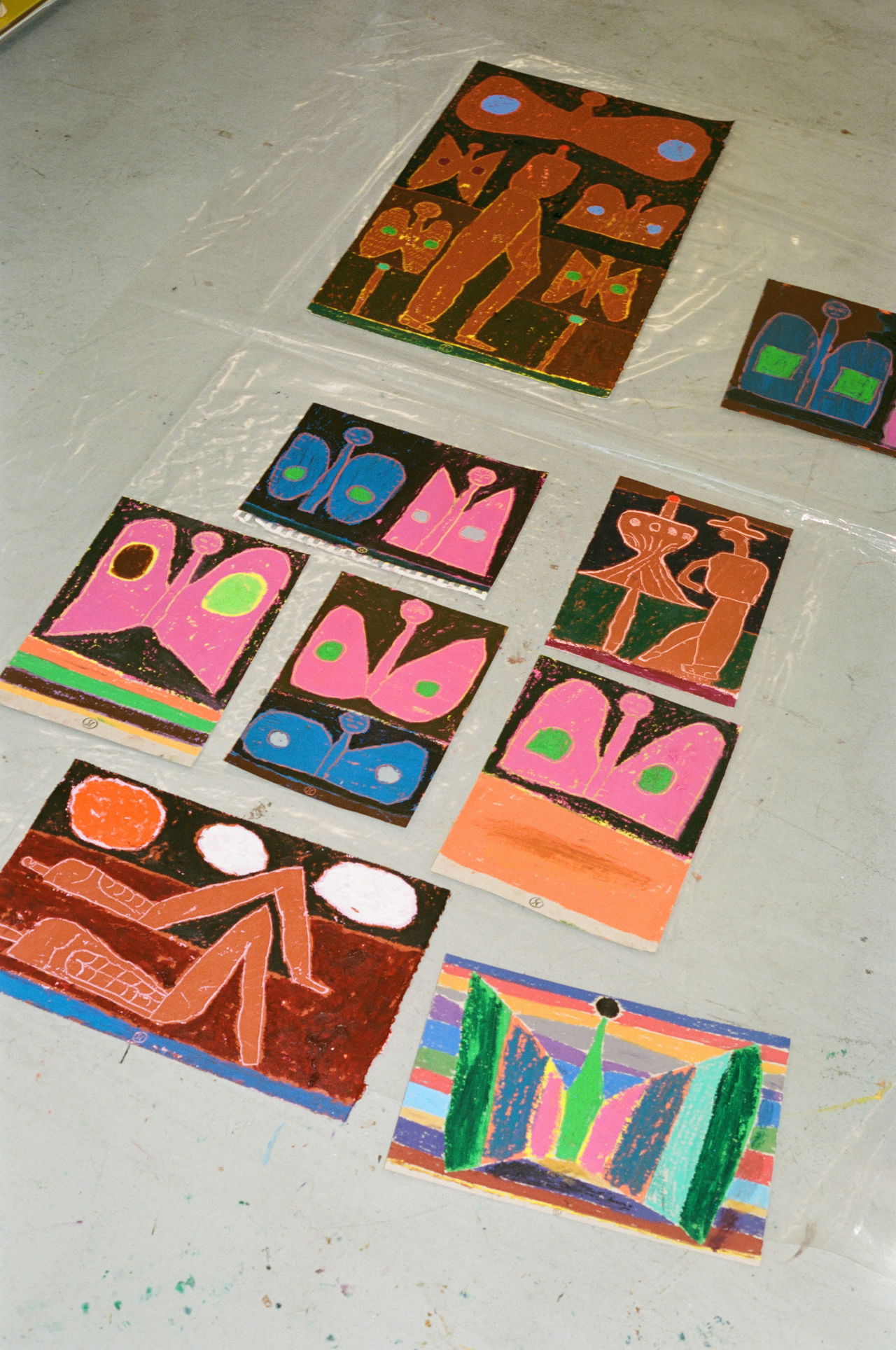
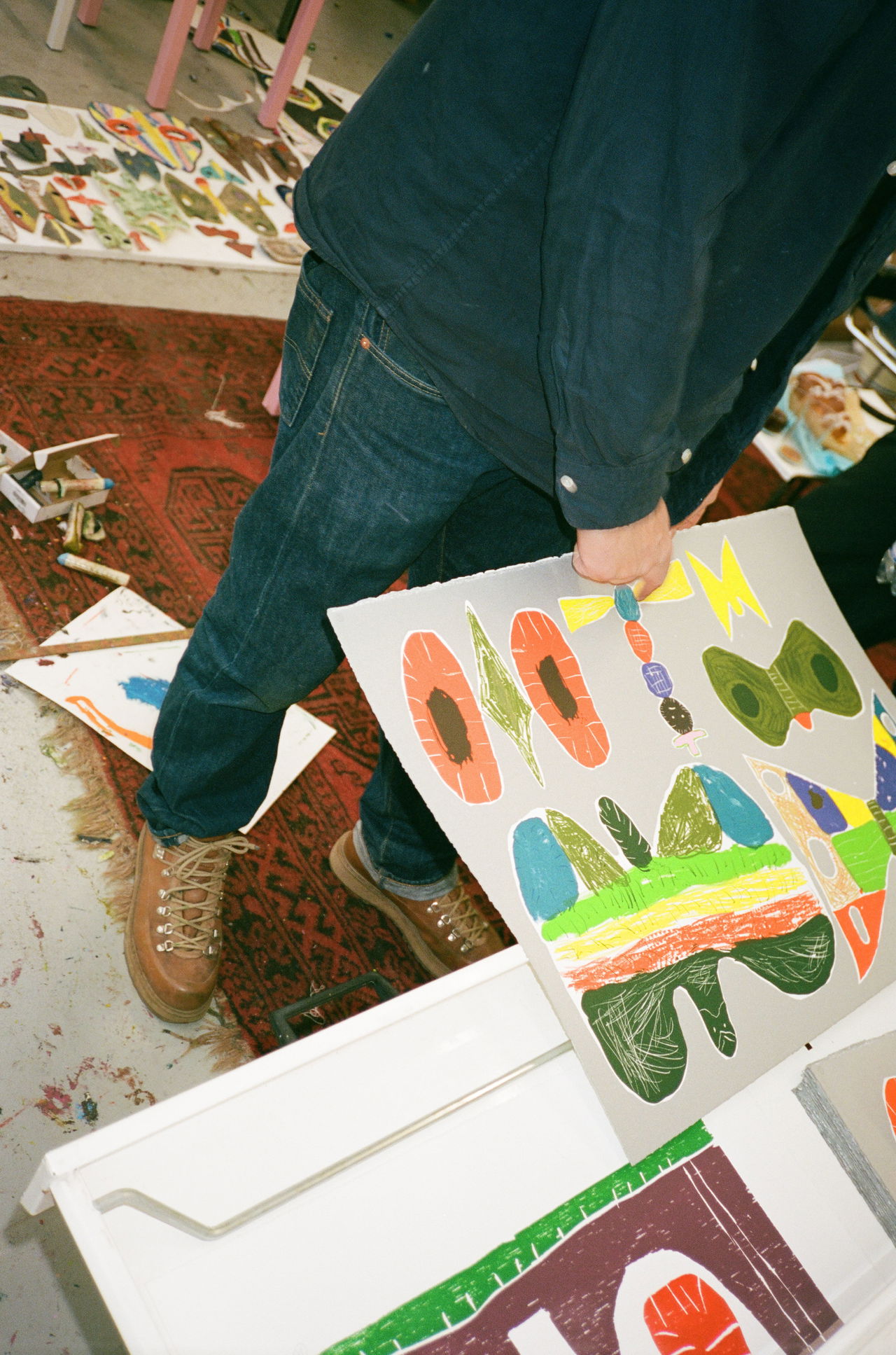
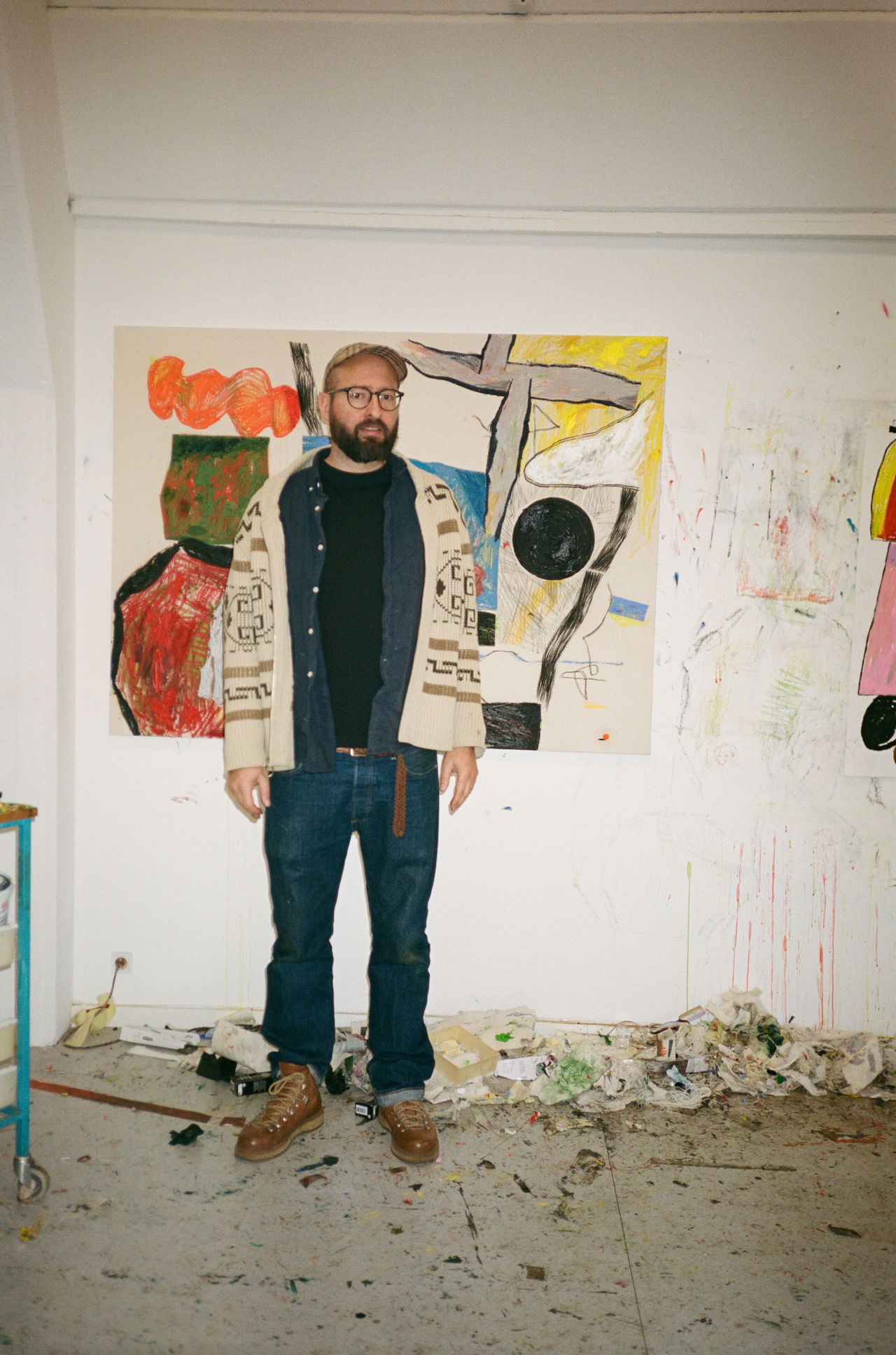
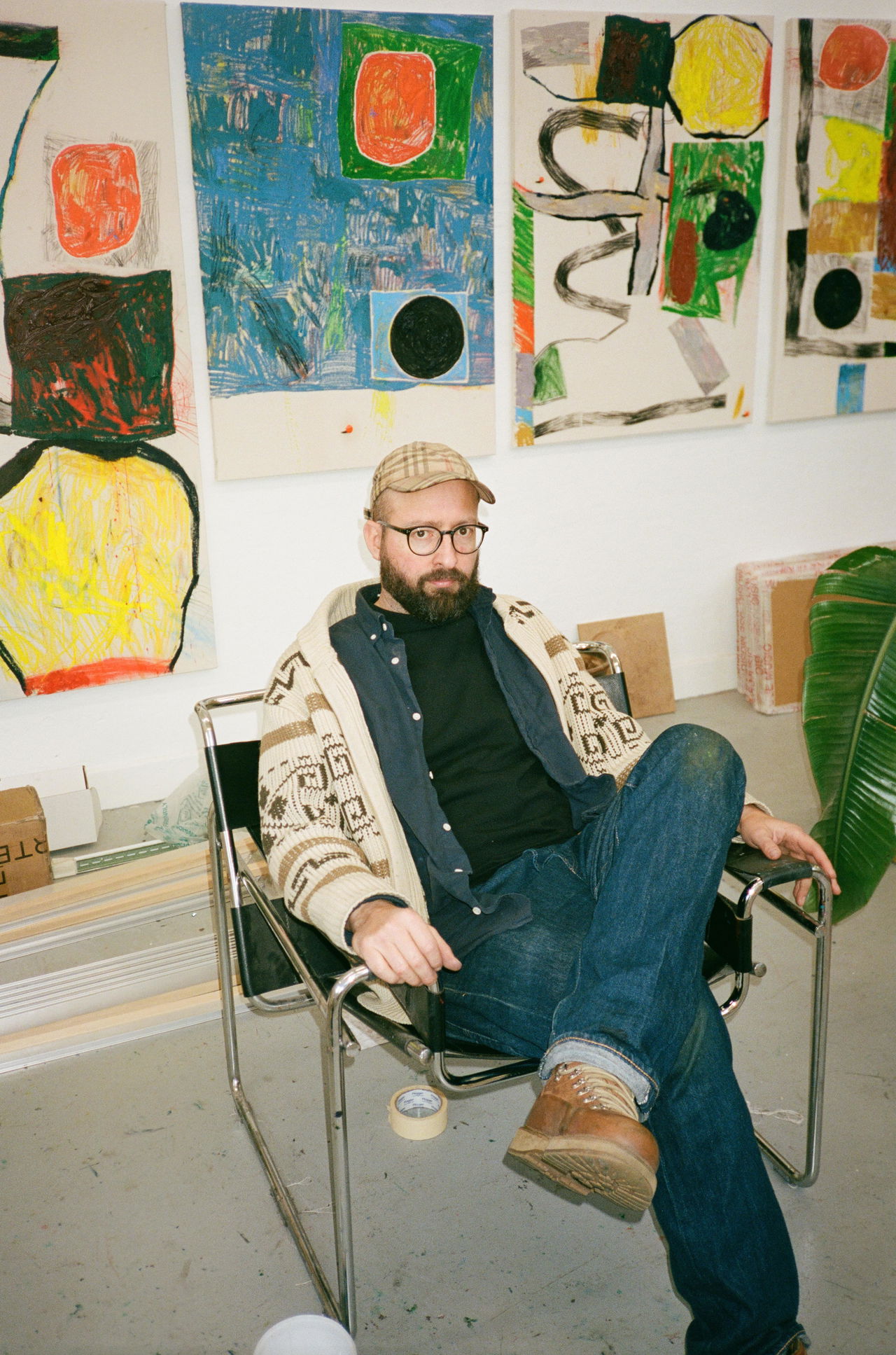
Sune Christiansen (b. 1976) is a Danish artist living and working in Copenhagen. With a background in graphic design, art direction, and animation, he has developed a vivid form of figurative abstraction where butterflies, harlequins, symbols, and bold colour fields drift between humour and unease. Working across painting, ceramics, and graphic works, Christiansen builds joyfully chaotic worlds that feel at once childlike, precise, and unmistakably his own.

Thanks for having us at your studio. It’s an overwhelming feeling to be here, surrounded by your works and the traces of your process all around the room. It feels like an amazing place to work—almost as if the studio itself is one big installation of your imagination.

What are you working on at the moment?

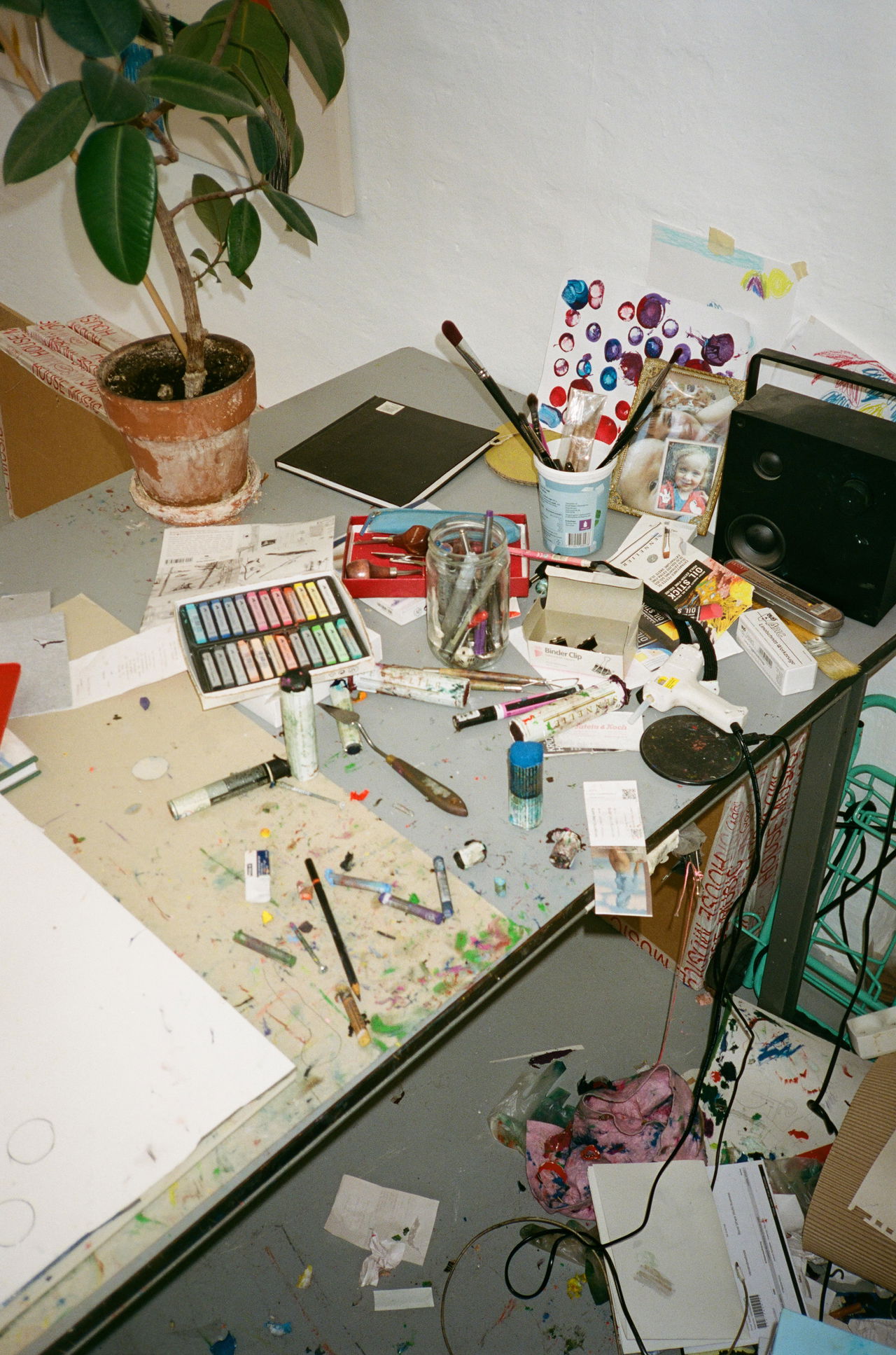
Well, thanks a lot for stopping by. I’m happy you like my studio. I guess it’s a bit of a mess, but that’s the way I like it. The whole point of having a studio, I think, is that you’re allowed to make a big mess. At the moment, I’m working on a show for Alice Gallery in Brussels. The opening is in the beginning of February, so there’s a lot of work to be done.

Are you going to stop by the pissing boy while in Brussels?

I already did. I was in Brussels in the spring (for the first time), and I kind of stumbled upon it by coincidence. That’s one of the things I like about Brussels: everything is within walking distance, but it still feels like a real city. Brussels feels like Paris, but with nice people. Sorry—that was a joke. I like Parisians too.

Anyway, I might go see the pissing boy again. I like small, unimpressive statues. I think they spark hope. It’s not always the biggest or most impressive work that becomes the most cherished.

I really like how your paintings feel almost “paused” in the process, with elements that seem to work against gravity. I’m guessing that’s intentional. Do you always know when to stop working on a piece?

I think you’re absolutely right. My compositions are often almost off-balance. I find that moment—where everything feels like it’s about to collapse—to be very interesting. I like that you can’t tell whether the composition is about to fall apart or fall into place. My expression is dynamic, and I often think of my paintings as keyframes—maybe because I have a background in animation.

But to answer your question: I’m almost always unsure of when to stop. If I go too far, it becomes obvious. My biggest fear is stopping too early.

"Curiosity and the hunger for knowledge are deeply human."

I remember seeing some of your early works—it’s interesting to see how certain elements appear again in new, freer forms and contexts. You must have made thousands and thousands of drawings between then and now. Do you feel differently about older work compared to something you’ve just created?

I’m often in love with what I just made, and then I hate whatever I made yesterday.

In a way, I’ve created an alphabet for myself. It consists of elements that I combine in different ways. Sometimes new elements appear and others disappear. Like a language that slowly evolves.
What’s the fascination with butterflies?

Well, the butterfly is an incredibly fascinating creature. That’s probably why it’s such an overused symbol. The butterfly undergoes the wildest transformations in its life. It starts as an egg, then becomes a larva, then a pupa, and then—God help us—a butterfly. The same creature in four completely different stages. It’s no surprise that humans throughout history have projected all kinds of meaning onto that specific animal.

I’ve always been fascinated by those butterfly collections—species pinned neatly side-by-side in display cases. It’s incredibly beautiful. And the idea of going out into the world to collect and map creation feels so positive. Curiosity and the hunger for knowledge are deeply human. But another deeply human trait seems to be taking up all available space and forgetting to leave room for other species. So more and more disappear, and the collections turn into sad mausoleums—reminders of something extraordinary that will never return. Butterflies are insanely beautiful. Mosquitoes and woodlice just don’t have the same visual charm, even though they’re probably just as essential.

Black coffee and cigarettes — anything else in your studio diet routine?

No cigarettes, no drugs, no alcohol. The strongest thing I consume in the studio is Jolly Cola—or coffee with whole milk. There’s nothing very romantic or “artist myth” about that, but if it gets stronger than Jolly, I can’t work.

Your wife’s studio is just next door, and I know you sometimes bring your kids to work. The lines between work and off-work seem very blurred. How does that work for you?

It’s true—we sometimes bring our kids to the studio, but only to play. I really try to separate work and non-work, but I guess that’s not very easy in our line of work.

What’s your favourite childhood memory?

I’m not sure what my absolute favourite memory is, but I had a really good childhood. I thank my mother for that. I grew up without money and without a father—but with a lot of support. I still have that support. When I told my mother I was considering quitting my good job to work as an artist, she said I should hurry up and do it before it was too late. Thanks, mom!

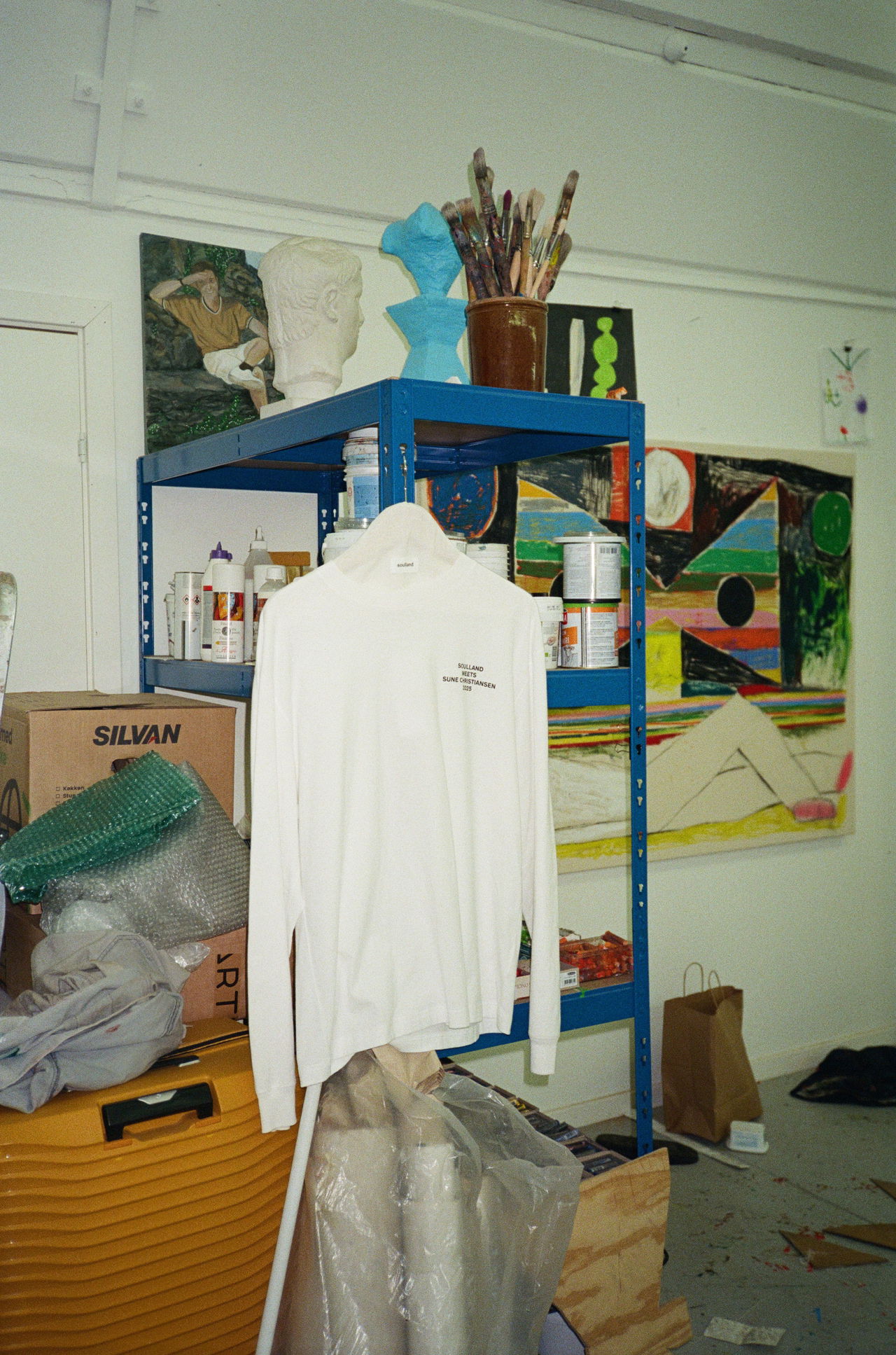
Soulland’s collaboration with you turned one of your ceramic sculptures into a print on a long-sleeve T-shirt—it looks amazing, by the way! I love how one of your sculptures becomes a graphic and then becomes a kind of human sculpture once someone is wearing it. Is fashion something that interests you?

I’ve always been a little vain, and I care about how I dress—although you might not think so. Visual communication interests me, and that’s essentially what fashion is, right? Either way—it’s a damn good-looking T-shirt!

Any last words you’d like to add?

Peace!

SOULLAND MEETS SUNE CHRISTIANSEN

ONLINE NOW

VIEW THE COLLECTION