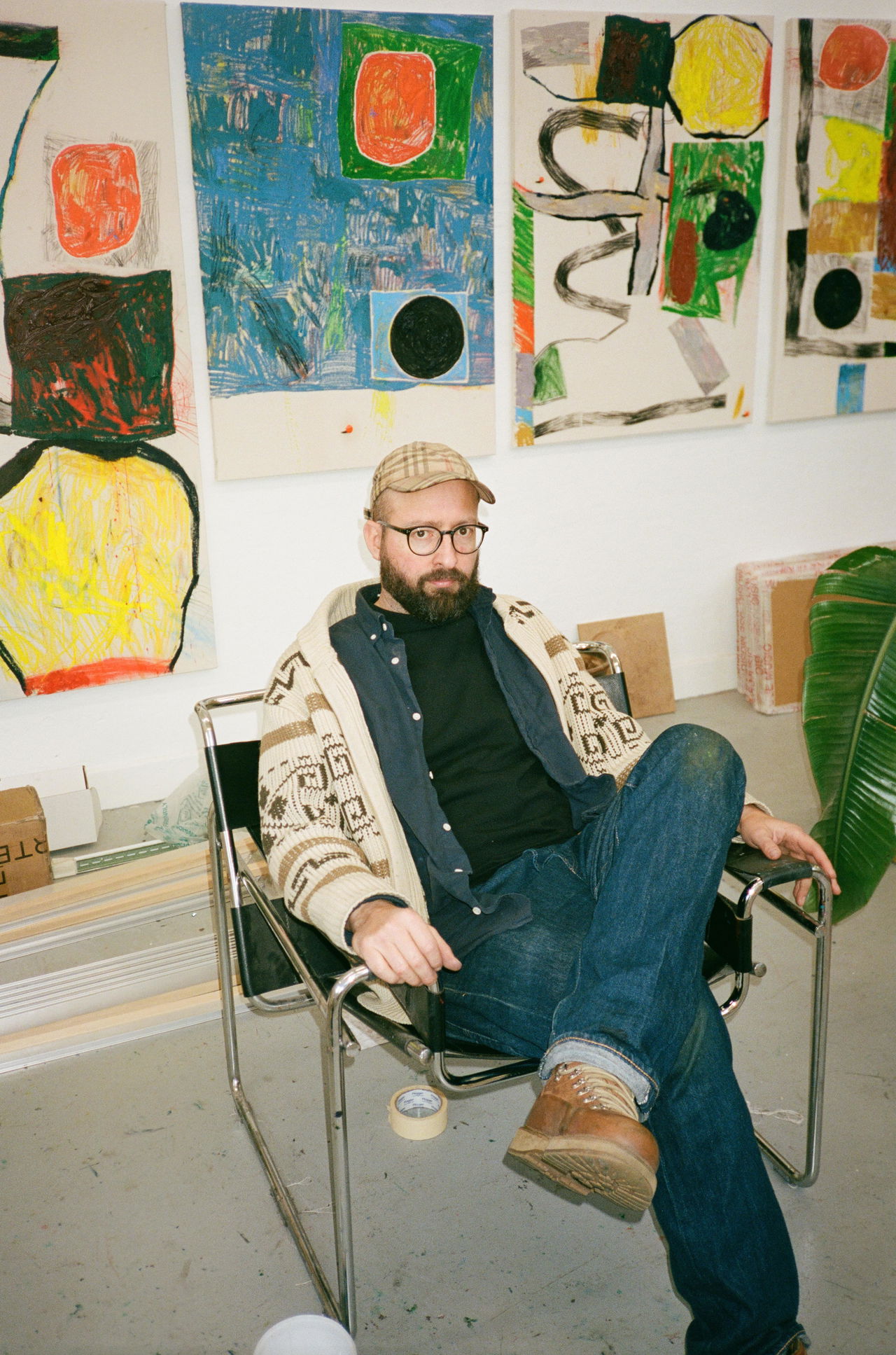
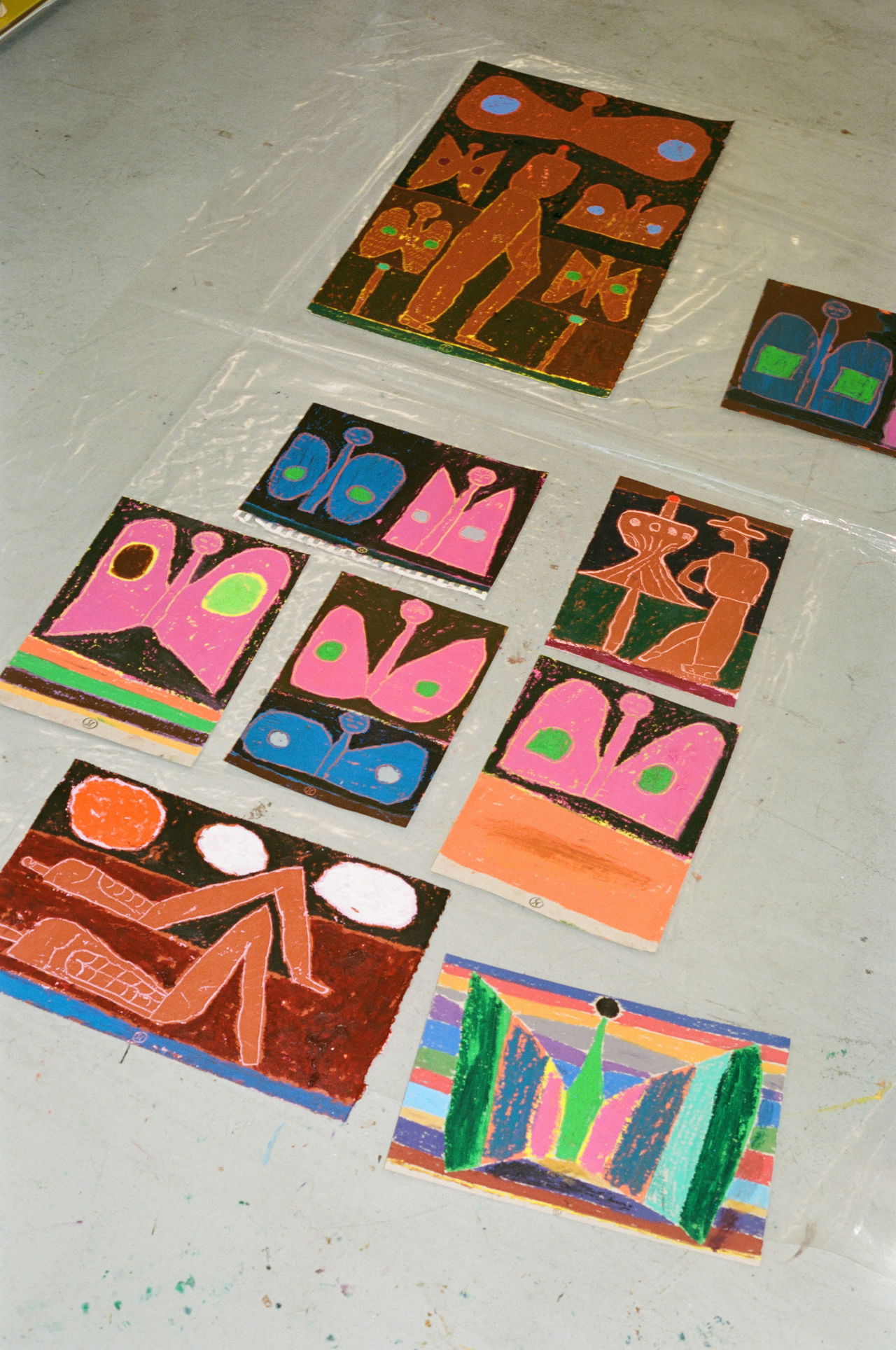
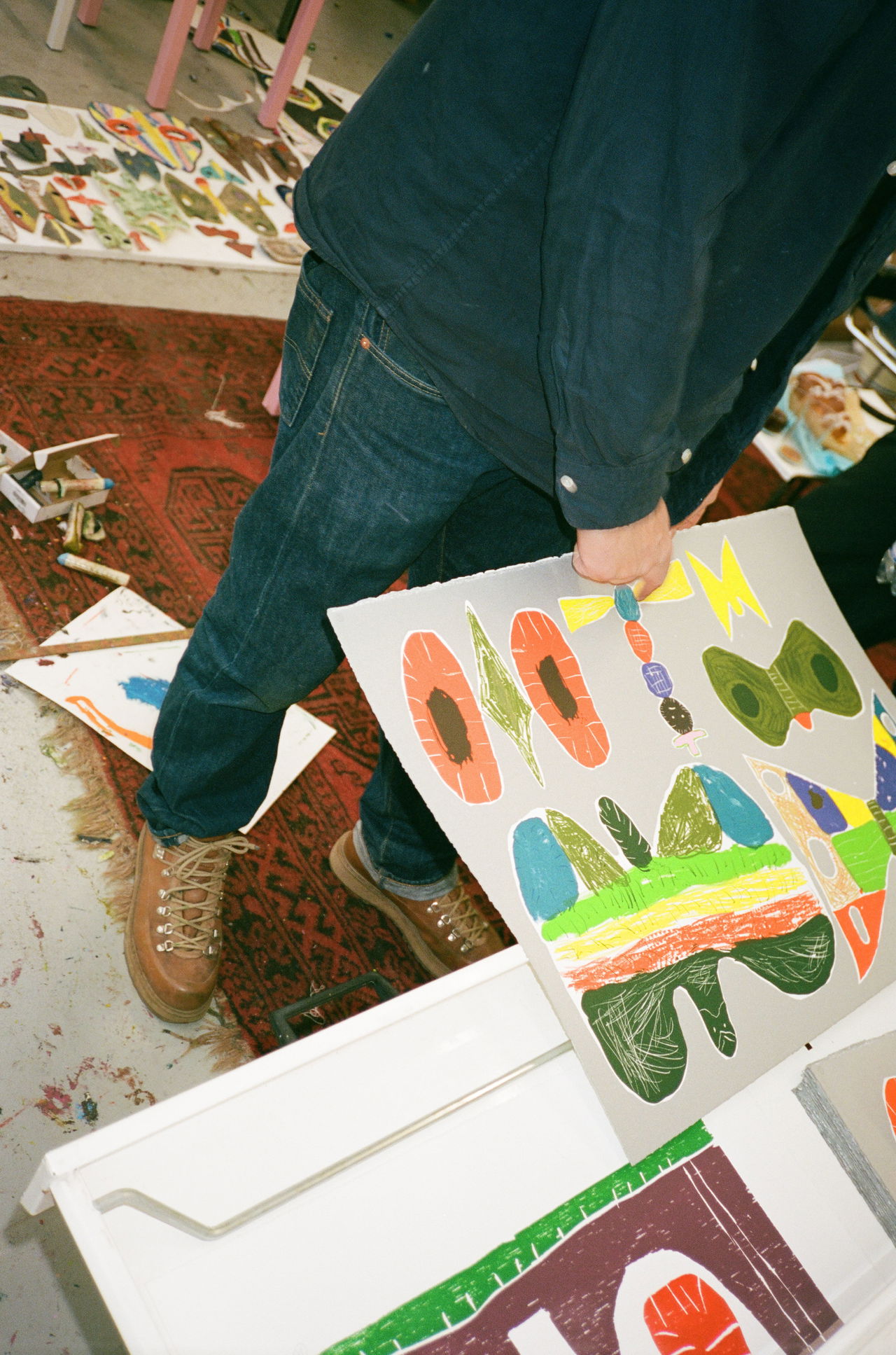
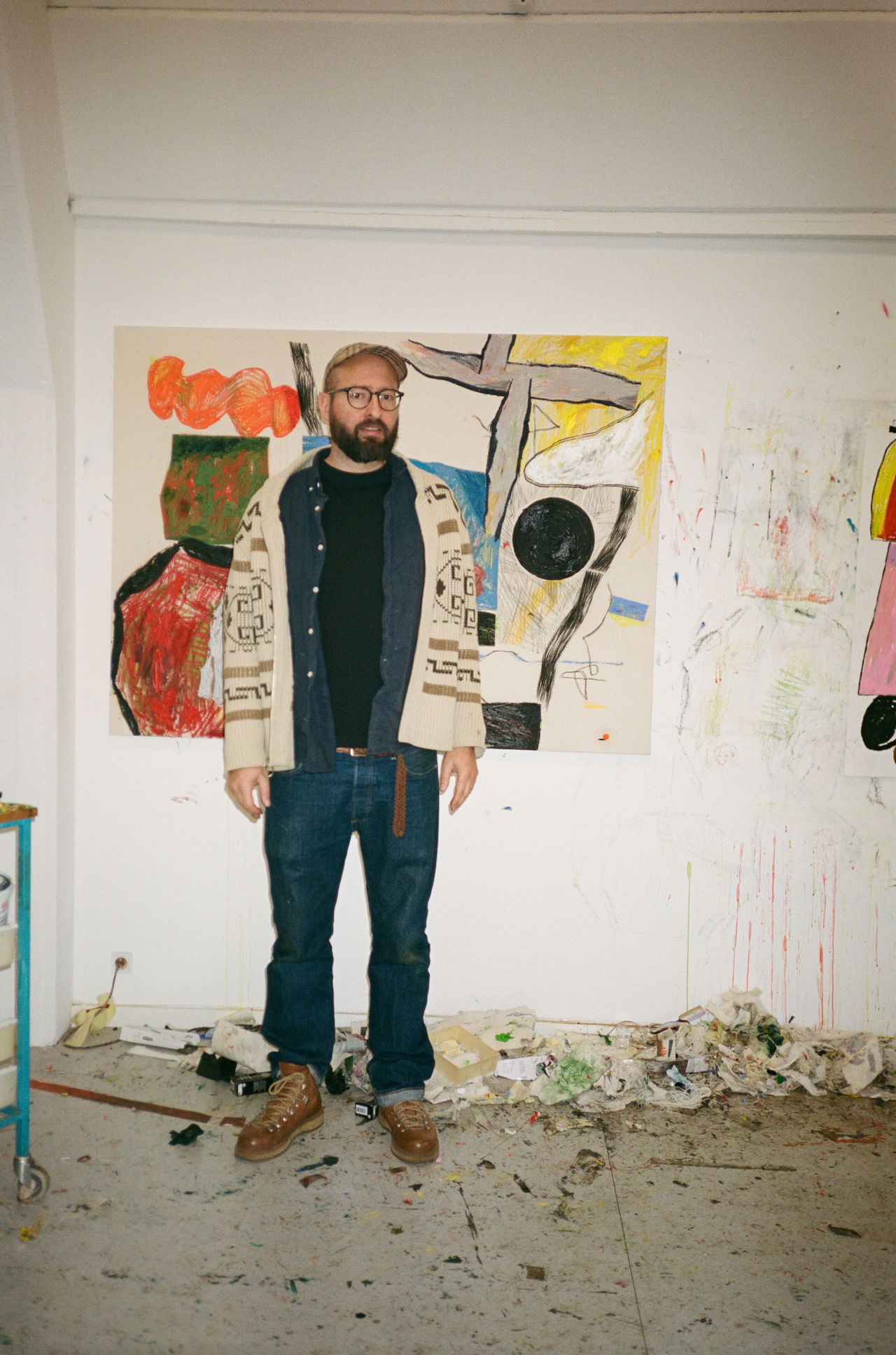
Sune Christiansen (b. 1976) is a Danish artist living and working in Copenhagen. With a background in graphic design, art direction, and animation, he has developed a vivid form of figurative abstraction where butterflies, harlequins, symbols, and bold colour fields drift between humour and unease. Working across painting, ceramics, and graphic works, Christiansen builds joyfully chaotic worlds that feel at once childlike, precise, and unmistakably his own.
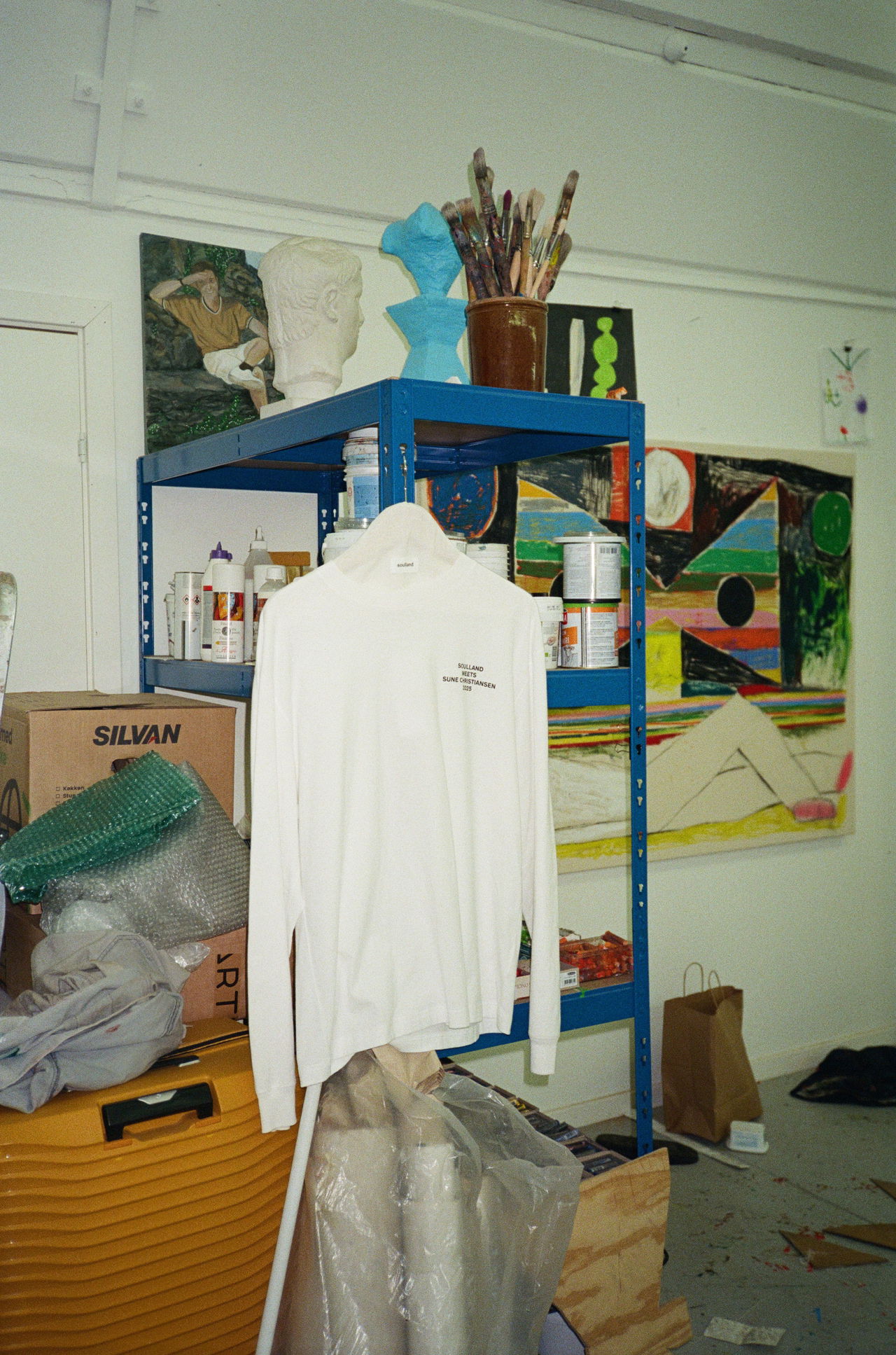
Thanks for having us at your studio. It’s an overwhelming feeling to be here, surrounded by your works and the traces of your process all around the room. It feels like an amazing place to work—almost as if the studio itself is one big installation of your imagination.
What are you working on at the moment?
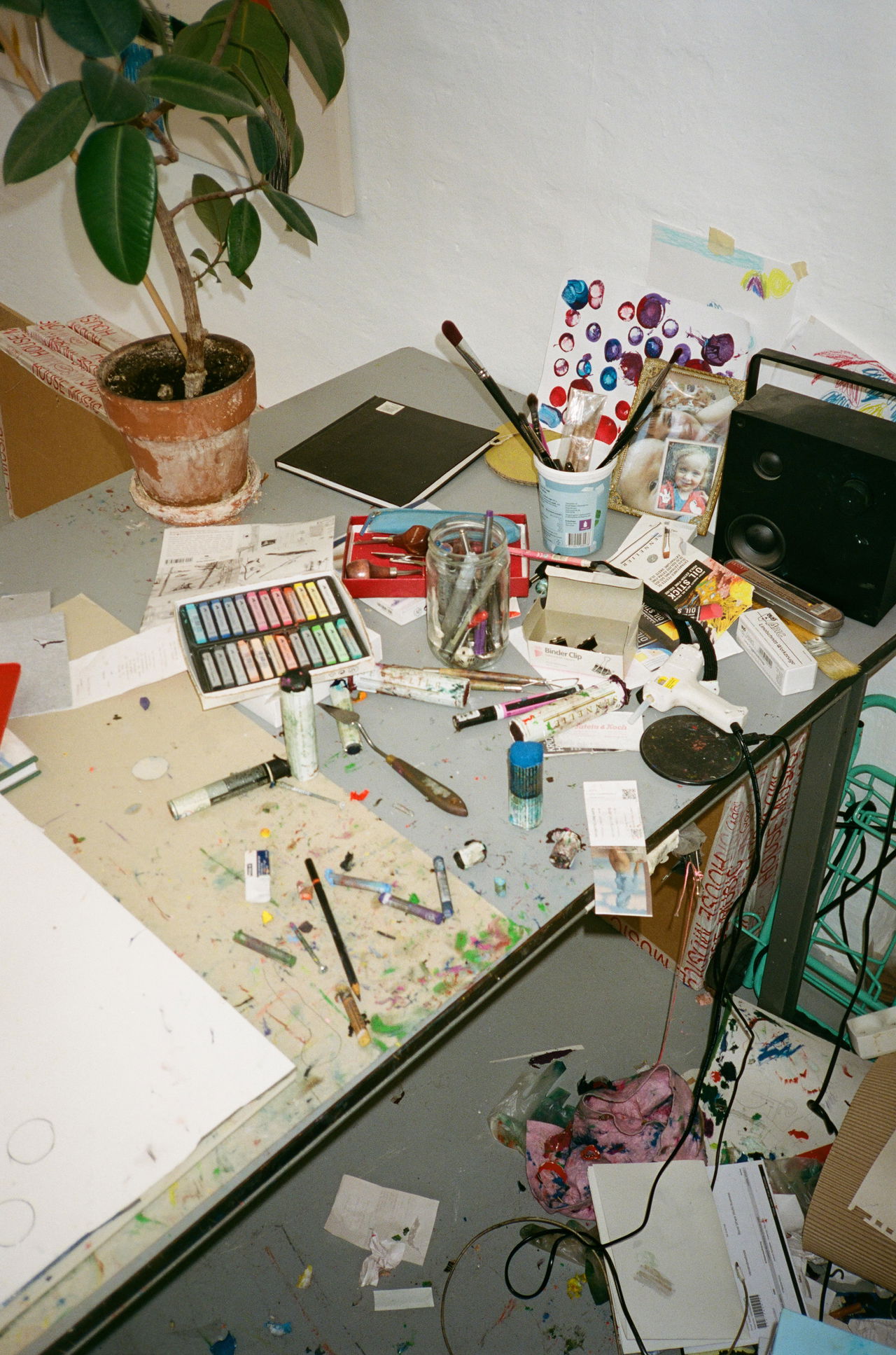
Well, thanks a lot for stopping by. I’m happy you like my studio. I guess it’s a bit of a mess, but that’s the way I like it. The whole point of having a studio, I think, is that you’re allowed to make a big mess. At the moment, I’m working on a show for Alice Gallery in Brussels. The opening is in the beginning of February, so there’s a lot of work to be done.
Are you going to stop by the pissing boy while in Brussels?
I already did. I was in Brussels in the spring (for the first time), and I kind of stumbled upon it by coincidence. That’s one of the things I like about Brussels: everything is within walking distance, but it still feels like a real city. Brussels feels like Paris, but with nice people. Sorry—that was a joke. I like Parisians too.
Anyway, I might go see the pissing boy again. I like small, unimpressive statues. I think they spark hope. It’s not always the biggest or most impressive work that becomes the most cherished.
I really like how your paintings feel almost “paused” in the process, with elements that seem to work against gravity. I’m guessing that’s intentional. Do you always know when to stop working on a piece?
I think you’re absolutely right. My compositions are often almost off-balance. I find that moment—where everything feels like it’s about to collapse—to be very interesting. I like that you can’t tell whether the composition is about to fall apart or fall into place. My expression is dynamic, and I often think of my paintings as keyframes—maybe because I have a background in animation.
But to answer your question: I’m almost always unsure of when to stop. If I go too far, it becomes obvious. My biggest fear is stopping too early.
I remember seeing some of your early works—it’s interesting to see how certain elements appear again in new, freer forms and contexts. You must have made thousands and thousands of drawings between then and now. Do you feel differently about older work compared to something you’ve just created?
I’m often in love with what I just made, and then I hate whatever I made yesterday.
In a way, I’ve created an alphabet for myself. It consists of elements that I combine in different ways. Sometimes new elements appear and others disappear. Like a language that slowly evolves.